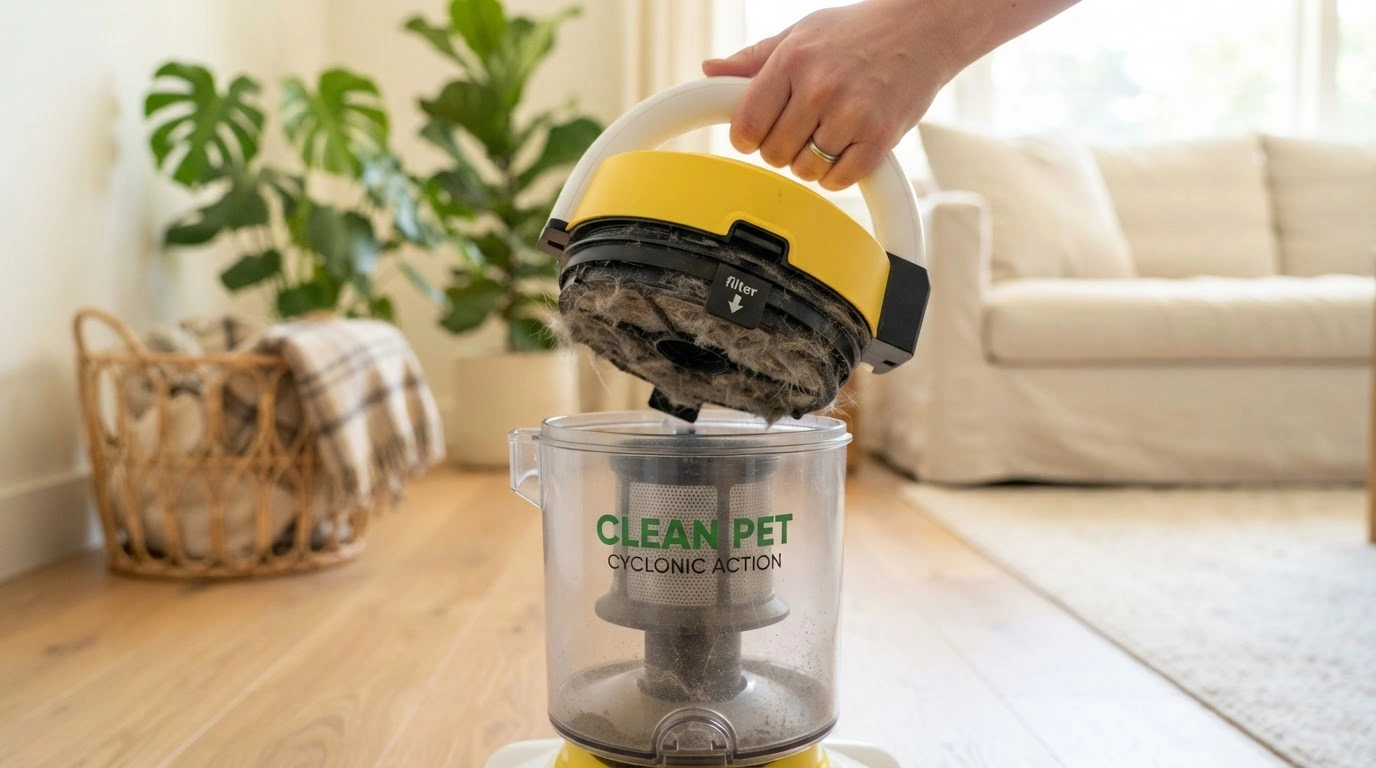
Vacuum cleaners are among the most widely used household appliances worldwide to maintain a clean and tidy home. While this magic appliance helps keep your house spotless, it is also necessary to keep the cleaner well maintained. Often, a pungent smell from the cleaner as soon as you switch it on indicates that your vacuum cleaner filter requires cleaning. While most vacuum filters are washable, some cleaners cannot be washed with water. So, it is essential to understand the different types of vacuum filters and their care methods.
Why is It Important to Clean Your Vacuum Filter?
Have you not yet thought of cleaning your vacuum filter? Here are some reasons to consider cleaning regularly.
- When the vacuum filter is clogged, it impacts the suction power, which affects the machine’s operation because the vacuum has to exert more power to suck in air, resulting in overheating.
- A clogged vacuum cleaner will not clean well; instead, it recirculates dust and debris into the air, posing respiratory health risks for many.
Just clean your washable filter after every 1-3 months and replace the non-washable filter to enjoy a clean house and a healthy environment.
Can You Clean Your Vacuum Filter With Water?
By now, we know that cleaning the vacuum filter is a must. But can you clean a vacuum filter with water? This largely depends upon the type of filter installed in your vacuum cleaner. Your vacuum filter can be either washable or non-washable.
The basic difference between a washable and a non-washable filter lies in their composition.
| Washable Vacuum Filter | Non-washable Vacuum Filter | |
| Material Type | The material of any washable filter is durable enough, such as foam or cloth, to withstand moisture without any damage. | On the other hand, non-washable filters are made up of materials such as paper that cannot tolerate moisture. |
| Cleaning Process | You will need water to clean this filter type. | Usually, you have to gently tap on the filter to clear out the clog. |
However, you must always follow the manufacturer’s instructions for cleaning the filter to avoid any damage.
What Are the Different Washable Vacuum Filters?
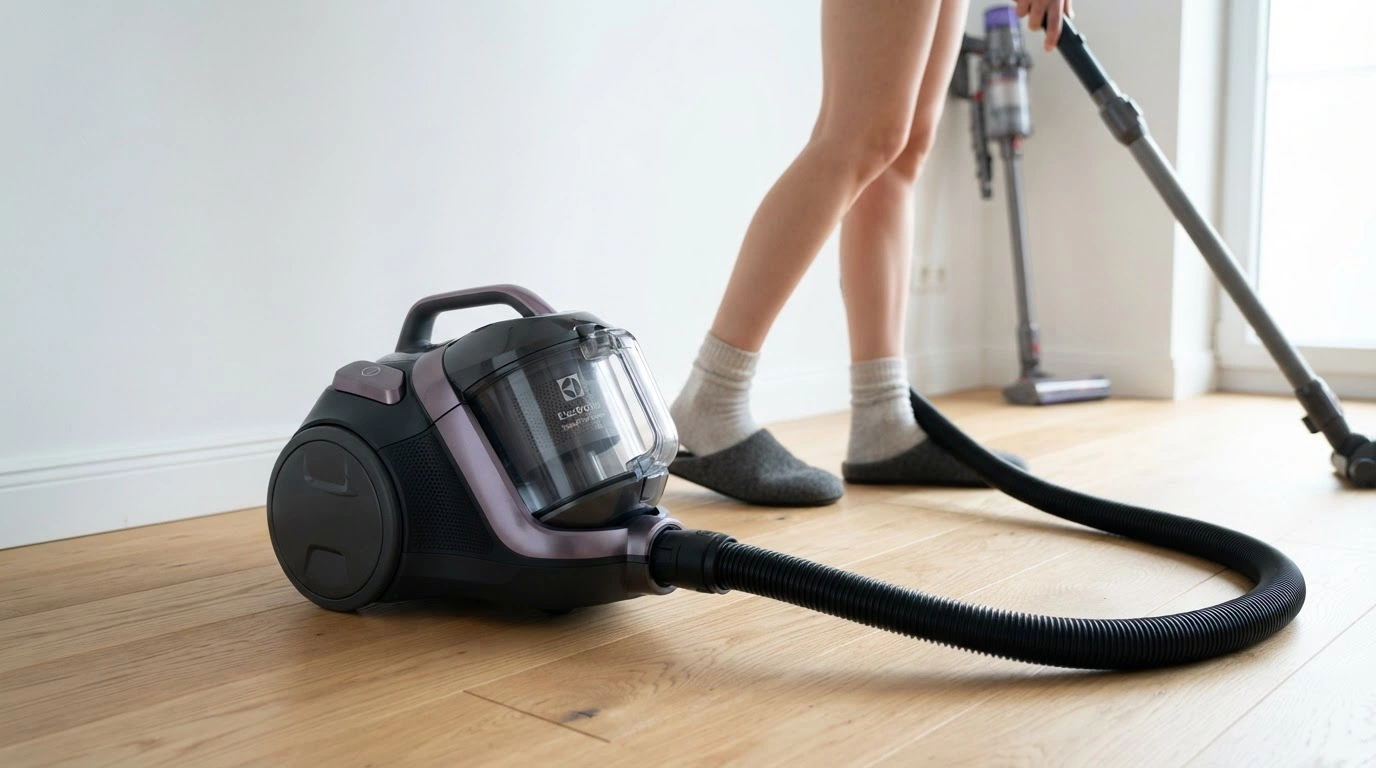
If you are ready to invest time in cleaning your vacuum filter, there are ample washable options available.
Foam Filters
Foam vacuum filters are one of the most common options available. This spongy material is extremely porous and readily captures large particles, such as debris and pet hair. Foam filters are among the most eco-friendly and affordable solutions because they can be easily washed and reused multiple times.
Washable HEPA Filters
A High Efficiency Particulate Air (HEPA) filter is considered one of the most efficient vacuum filters, as it can trap 99.97% of allergens and dust particles.
You can find HEPA filters in both washable and non-washable forms. HEPA filters made up of woven synthetic fibers are usually the ones that can be washed with cold water.
Cloth Filters
Cloth vacuum filters have a reusable fabric filter surface. These fabric bags are designed to hold heavy loads of debris and can be washed with water for multiple uses. The efficiency of the cloth filter in capturing different dust particles depends on the fabric type, the weave pattern, and the number of layers in the filter.
Synthetic Fiber Filters
A non-woven synthetic fiber vacuum filter is another great washable option that you can use several times after rinsing it with water.
What Are the Different Non-washable Vacuum Filters?
Apart from washable filters, you will come across various filter options that cannot be washed but can be cleaned in other ways.
Paper Filters
One option in the non-washable category of vacuum filters is a paper filter, preferred for its affordability and high efficiency. As it is made of high-quality paper, it cannot be washed with water. The only way is to dispose of it when it is clogged.
Disposable HEPA Filters
These HEPA filters are non-washable, and you must tap them against the side of the trash can to remove the dust. However, you need to dispose of the HEPA filters every few months, depending on how clogged they are.
Activated Charcoal Filters
Charcoal fibers are a great pick for removing dust and odor from your house. These filters are non-washable but a perfect piece for houses with pets.
What Are the Steps to Clean a Washable Vacuum Filter With Water?
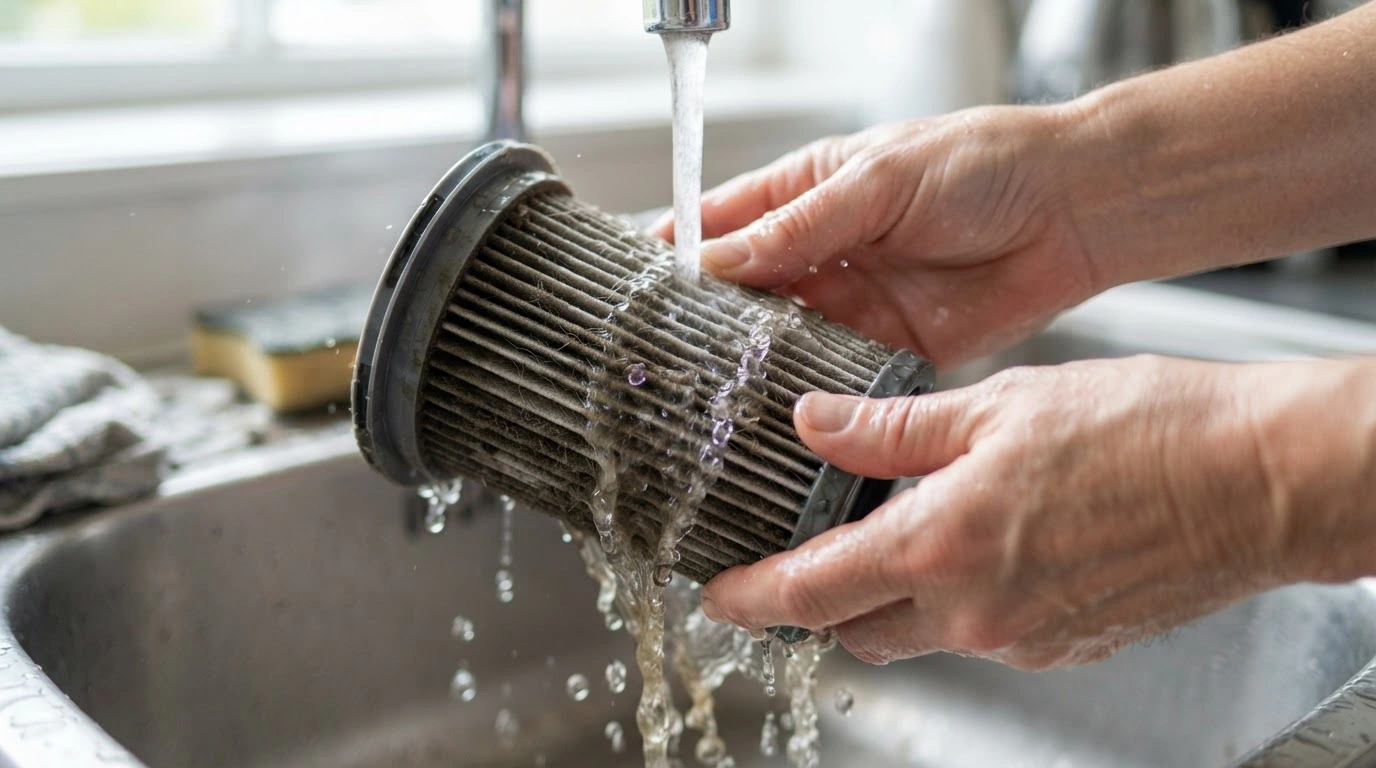
Cleaning a vacuum filter is easy, but using the wrong method can damage it, leading to replacement. So, how can you clean a vacuum filter with water without damaging it? Just a few simple steps can give you a clean filter.
Step 1
Carefully unscrew and open the vacuum cleaner's suction compartment.
Step 2
Now carefully remove the filter from the vacuum cleaner and first remove any loose dust from it.
Step 3
Place the filter under running cold water and rinse it thoroughly to remove any remaining dirt.
Step 4
Do not scrub or use soap to clean the filter, as this can damage the filter surface.
Step 5
Once the filter is washed, shake it well to remove excess water.
Step 6
Make sure you air-dry the filter completely for at least 24 hours.
Step 7
Once the filter has dried properly, you can reinstall it in the vacuum cleaner.
What Are the Common Mistakes to Avoid While Cleaning a Vacuum Filter?
A lot of people might have this complaint that their vacuum cleaner does not work properly after cleaning the filter. This might happen only because of a few common mistakes that vacuum owners make.
- The very first mistake is to put the filter back without allowing it to dry completely. You must let the filter dry for at least 24 hours before installing it back in the vacuum cleaner.
- Another major mistake many people make is using hot water for cleaning. While hot water is a great idea for deep cleaning, it can damage the filter’s surface.
- Often, people use detergent and scrub the filter aggressively, thinking it will clean it better. However, it may damage the filter's surface.
- While washable filters can be used multiple times, you must not forget that it still has an expiry date. Failing to replace the filter when necessary is another major mistake some people make.
How Often Should You Clean Your Vacuum Filter?
There is no specific time when you should clean your vacuum filter. It entirely depends on the vacuum cleaner’s usage. However, you must clean your vacuum filter as soon as you notice a foul smell when you switch the machine on. Also, you must clean the filter if you notice a decline in the machine's suction power.
Here are some common vacuum filter cleaning routines for different uses.
Cleaning of Public Areas - Filters should be cleaned weekly.
Household Light Cleaning - Filters can be cleaned every 2 to 3 months.
Household With Pets - It is ideal to clean the filter every month, or even biweekly.
When Should You Replace Your Vacuum Filter?
While washable filters are durable and reusable, they should be replaced after a certain period. However, how can you tell if it’s the right time to replace the filter? Here are some signs you should look for.
- The vacuum cleaner's suction power has declined.
- You can notice a bad smell every time you switch on the cleaner.
- The cleaner overheats unusually.
- You can notice frequent dirt buildup and clogging.
- The filter has been damaged after multiple uses.
What Happens If You Don't Clean Your Vacuum Filter?
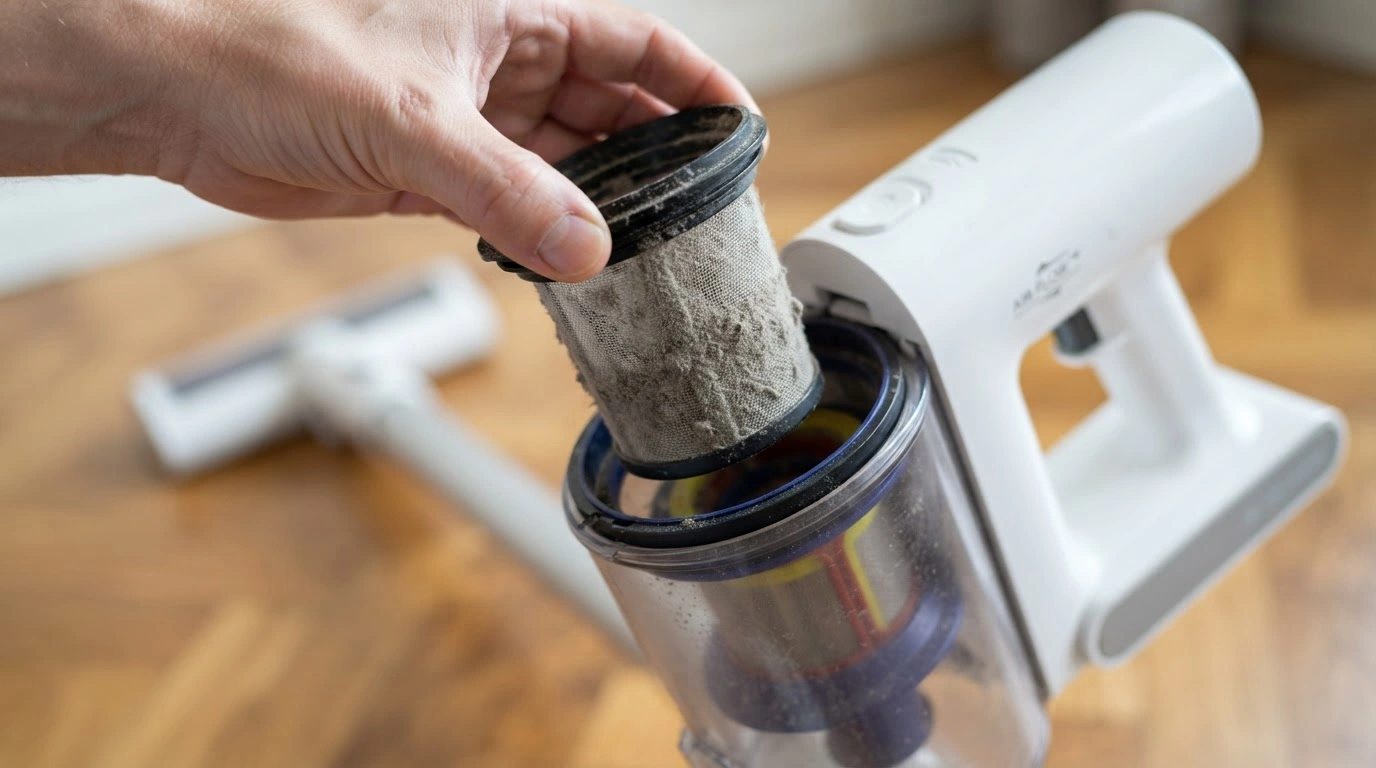
Regular cleaning of the vacuum filters is necessary given their usage. When your filter is clogged with dirt and you do not clean it, it causes forced suction and overheating, ultimately reducing the cleaner's efficiency. At the same time, when your indoor spaces are not properly cleaned, it reduces air quality, leading to allergies and respiratory issues.
Conclusion
Understanding the type of filter in your vacuum cleaner is key to keeping it healthy and efficient. You must know whether your vacuum filter is washable so you can clean it with water and reuse it. However, cleaning the filter with water also comes with a few precautions to take. One of the most important steps is to dry the filter thoroughly before reinstalling it to prevent damage to the motor. Moreover, maintaining a schedule for cleaning your vacuum cleaner will not only keep your machine healthy but also ensure a clean, healthy home.